There's Gold in That Data
The Modern Gold Rush


Healthcare is drowning in data. Organizations are sitting on a digital mountain of it, collected from every patient visit, every claim filed, every lab test run. This hoard of information tucked away in electronic health records (EHRs), billing systems, clinical trial databases, patient registries, and enterprise data warehouses (EDW) is a gold mine of untapped value.
But this isn't the easy kind of gold. It’s not lying on the surface, gleaming in the sun. It’s microscopic, measured in parts per million, locked away inside mountains of raw, messy, and inconsistent digital ore. The great challenge for modern healthcare isn’t a lack of data; it's the back-breaking work of prospecting, mining, and refining that raw material into something that can actually save a life or stop the financial bleeding.
The raw data is a chaotic mess of signal and noise, fragmented across systems and riddled with errors. On its own, it’s worthless. It has to be shaped, checked, and curated. It has to be secured. It has to be analyzed by skilled people with modern tools. Only then can it be turned from useless rock into actionable intelligence that drives life-altering discoveries and bottom-line results.

From Raw to Refined
To make sense of this, let's think like a gold miner. This framework will guide us through the journey from low-value data to high-value analytical assets.
Raw Ore: This is the mountain. The vast, messy, and heterogeneous data from your EHRs, claims systems, pharmacy databases, and clinical trials. It’s big, it’s ugly, and it’s full of potential.
The Mining Process: This is the initial analysis. You’re assessing the ore, understanding its basic properties, identifying the valuable veins, and spotting the worthless rock that needs to be discarded. This is the work of data quality assessment and data discovery process.
The Refinery: This is where the real work happens. It’s the critical process of data curation a deliberate series of actions to cleanse, standardize, enrich, and govern the data. This is where you purify the ore.
Gold Nuggets: These are the granular insights you extract from high-quality, curated data. A single, verified insight like identifying the key driver of patient readmissions is a gold nugget of immense value.
Gold Bullion: This is the final product. These are the high-value analytics tools built from curated data the predictive models, the operational dashboards, the strategic reports. They are the refined, standardized bars of gold with recognized worth that you can build a business on.
Ready to start mining?
Get posts like this delivered to your inbox.
The High Stakes of the Endeavor
The reward for doing this right is profound. The COVID-19 pandemic showed what was possible when the rapid analysis of health data enabled life-saving discoveries and guided global public health responses. Success means longer, healthier, happier lives.
The penalty for failure is just as severe.
Poor data quality isn't a minor IT headache. It’s a direct threat to patient safety, a primary driver of staggering financial losses, and a corrosive force that eats away at the trust in our healthcare system. In an era of shrinking margins and soaring labor costs, no organization can afford to leave this gold in the ground. The mining operation is no longer a "nice-to-have." It’s an imperative for survival.

Part 1: The Anatomy of Data Quality: Understanding Your Ore
Before you can mine gold, you have to know what you’re looking for. You have to be able to tell a vein of ore from a worthless chunk of rock. In healthcare, this means establishing a rigorous definition of "good" data. This is the foundational knowledge you need to assess your raw material and make the business case for refining it.
Section 1.1: The Assayer's Six-Point Checklist
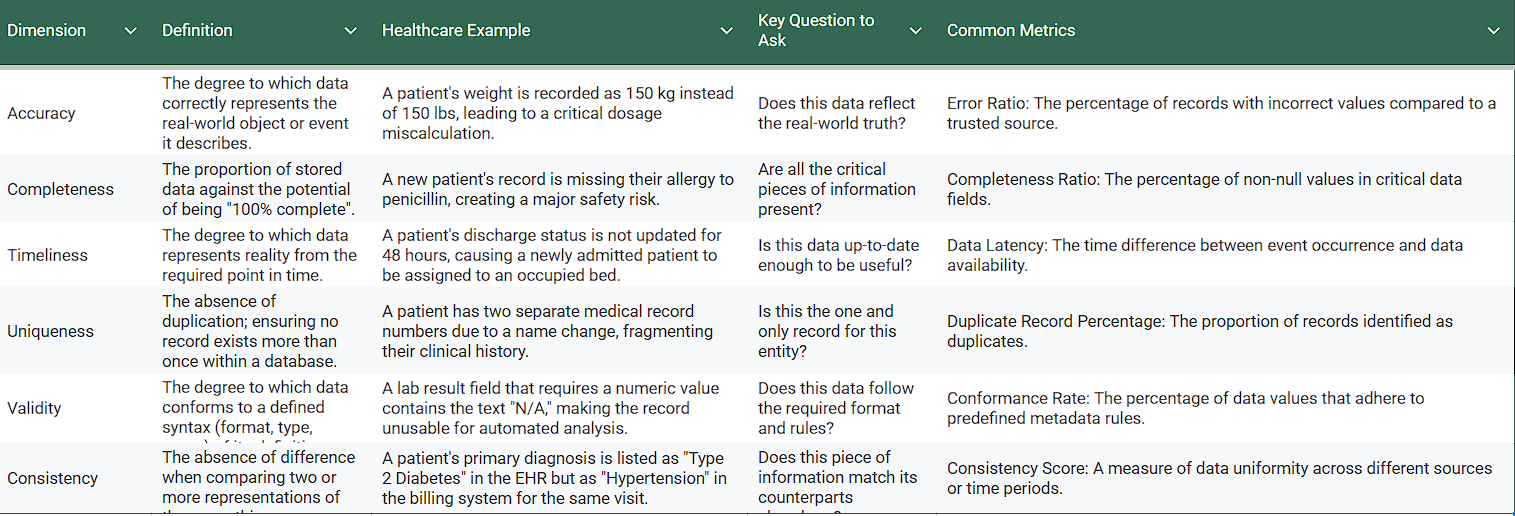
The industry has largely agreed on six core dimensions for assessing data quality. Think of this as the assayer's checklist for determining the value of your ore.
Accuracy: Is the data true? Does it correctly represent the real world? A simple typo can change a patient's age from 25 to 52 or their weight from pounds to kilograms, leading to a catastrophic dosing error.
Completeness: Is the data all there? This measures the absence of critical information. A patient record with a blank field for "medication allergies" isn't just incomplete; it's a ticking time bomb.
Timeliness: Is the data current enough to be useful? Information decays. A patient's insurance plan from six months ago is today's guaranteed claim denial, leading to lost revenue and patient frustration.
Uniqueness: Is this the only record? Duplicates are a plague in healthcare data. If "Joe Blow" has one record under his full name and another under a nickname, you have a fragmented, incomplete, and dangerous view of his health history.
Validity: Does the data follow the rules? It must conform to the required format, type, and range. A lab result field that accepts text like "N/A" instead of a number is invalid and breaks any attempt at automated analysis.
Consistency: Does the data match itself? A patient's date of birth should be the same in the EHR, the billing system, and the lab system. If it's not, the data is inconsistent, creating confusion and a high potential for error.
Section 1.2: Beyond the Core - The Critical Role of Data Integrity
While those six dimensions assess the data itself, there's a higher-order concept that underpins all trust: Data Integrity.
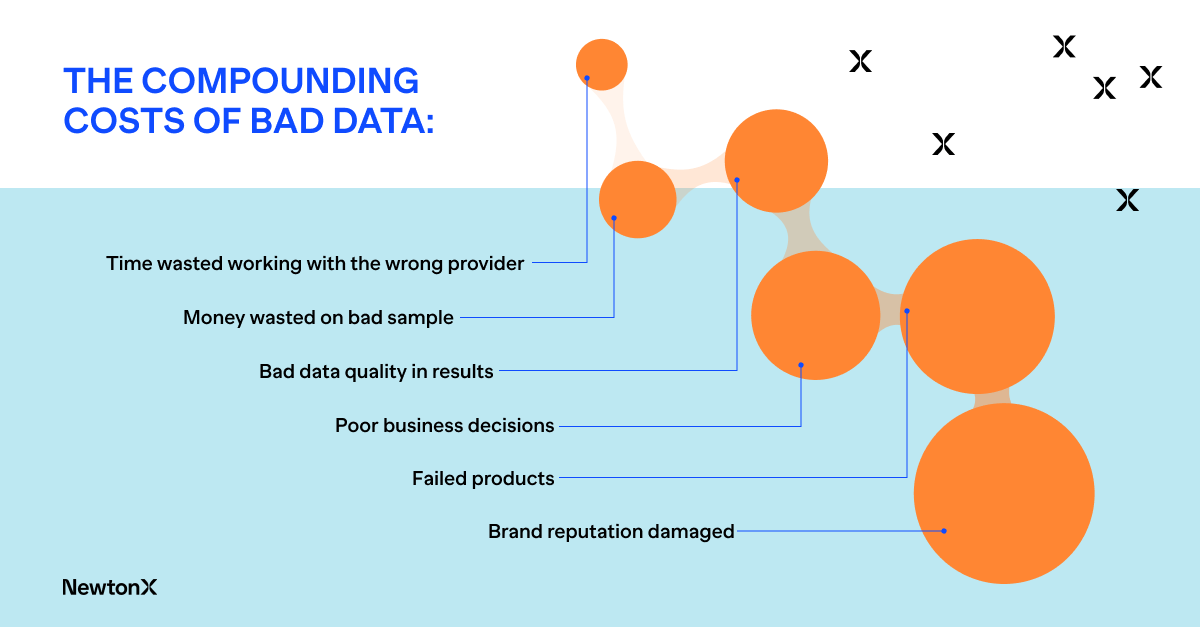
Data integrity is the maintenance and assurance of data accuracy and consistency over its entire lifecycle. The distinction is critical. Data quality asks, "Was the data right when we recorded it?" Data integrity asks, "Did the data stay right?"
A patient's blood type might be entered with perfect accuracy (high data quality). But if a system glitch or an unauthorized user changes that value later, you have a catastrophic integrity failure. Without integrity, even high-quality data is worthless because it can't be trusted. It is the outcome of robust technical controls (backups, audit trails) and organizational controls (access restrictions, physical security) that preserve data from corruption.
Section 1.3: The Human Cost of Bad Data: Patient Safety at Risk
The consequences here aren't abstract. They are measured in human lives. The Institute of Medicine defined six aims for healthcare safe, effective, patient-centered, timely, efficient, and equitable and bad data undermines every single one of them.
Bad data helps kill 100,000 Americans a year.
That’s the high-end estimate for deaths due to medical errors, and poor data quality is a huge contributing factor.
Medication Errors: A missing allergy, an incorrect weight leading to a dosage miscalculation, or an outdated medication list causing a harmful drug interaction. These are direct, data-driven failures that can kill.
Misdiagnosis: When a clinician works with an incomplete or inaccurate history—a missing lab result, a flawed report the risk of misdiagnosis skyrockets, leading to delayed or wrong treatment.
Flawed Guidance: Clinical Decision Support Systems are supposed to help doctors make better choices. But when the underlying data is garbage, the guidance is too. Studies have found the data feeding these systems can have completeness as low as 30.7%. This is like using a GPS that's missing 70% of the roads.
Section 1.4: The Financial Drain: How Bad Data Bleeds Your Bottom Line
Beyond the tragic human cost, the financial burden is immense.
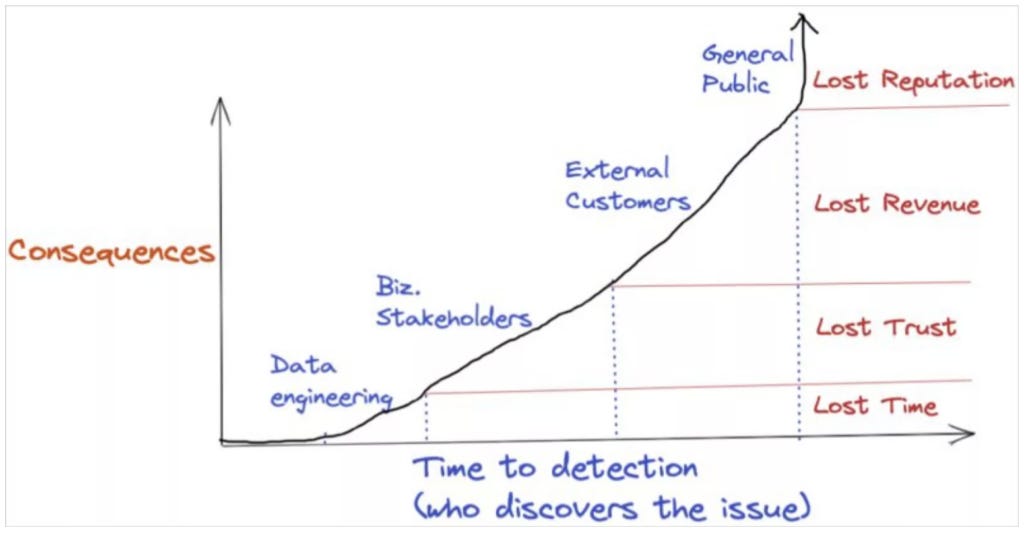
According to Gartner, poor data quality costs the average organization $12.9 million annually.
That’s not a rounding error; it's a self-inflicted hemorrhage. In healthcare, it manifests in two key ways:
Operational Waste: Staff waste countless hours on manual rework fixing errors, chasing down missing info, and reconciling reports. This is time that could be spent on patient care.
Revenue Cycle Leakage: Bad data is a primary cause of claim denials. In 2021, nearly 17% of all in-network claims were denied, often for simple, preventable data errors. For a typical hospital, that puts an average of $4.9 million in revenue at risk.
This creates a vicious cycle. Overworked staff make more data entry errors. This poor data leads to more claim denials and patient complaints, which creates more rework. This rework increases staff frustration and burnout, which leads to even more errors. Investing in data quality isn't just an IT project; it's a strategic intervention to break this debilitating operational doom loop.

Part 2: Mapping the Terrain: Where the Data Mines Are
Now that we know what we're looking for, we need to survey the landscape. We have to identify the "mines" the places where data quality problems are most common and understand the unique challenges of each.
Section 2.1: Prospecting the EHR Mine
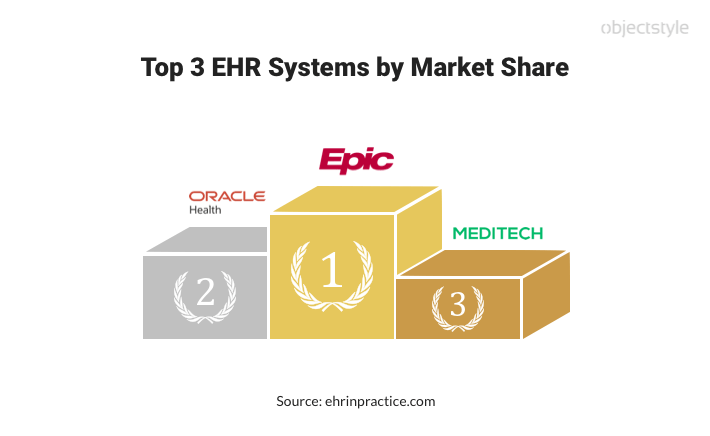
The EHR is the motherlode. It's the richest source of patient data, but it's also a notoriously difficult and dangerous mine. Designed for real-time documentation by hundreds of different users, it's a fertile ground for errors.
Inaccurate & Incomplete Data: Simple human error under time pressure is rampant. But the bigger issue is what's missing. A 2023 review found completeness was the most problematic dimension of EHR data quality. These gaps create a distorted patient picture.
The Duplicate Record Plague: Typos, name changes, and inconsistent identifiers lead to a single patient having multiple, disconnected records. This fragments their history and makes a holistic view impossible.
The Unstructured Data Problem: The richest clinical details are often locked away in free-text notes. This narrative gold is incredibly difficult to analyze at scale without advanced tools like Natural Language Processing (NLP).
The Bias lurking within: This is the most dangerous trap. EHR data is not an objective reflection of reality. It's riddled with systematic biases.
Selection Bias: The data only represents patients who have access to your health system, skewing it away from underserved populations.
Information Bias: The data itself is systematically wrong. A classic example is using ICD codes to maximize reimbursement rather than for pure clinical accuracy.
Ascertainment Bias: A diagnosis is more likely to appear in the record of a patient who is sicker or has better access to care, simply because they get more tests.
This leads to a crucial realization:
An EHR is not "ground truth." It is a "record of care."
The absence of a diagnosis doesn't mean the absence of disease. It may just mean the patient hasn't sought or received care for it yet. This reframes the entire task from a technical exercise to a complex interpretive science.
Section 2.2: Navigating the Payer Data Swamp
On the payer side, the challenges are different but no less severe. Here, data quality errors have immediate and massive financial consequences.
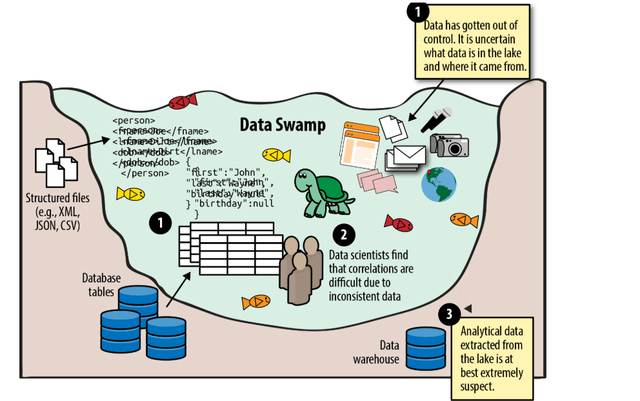
Inaccurate Provider Directories: Imagine trying to find a gold mine when four out of five maps are wrong. That’s the reality for payers. A 2021 study found that 80% of directory entries in the five largest private health plans had inaccuracies, creating huge barriers to care and leading to surprise medical bills.
Claims Processing Errors: The entire revenue cycle is built on a foundation of data. Inaccurate patient info, outdated policy details, or wrong medical codes are the main drivers of claim denials and the costly appeals process that follows.
Constant Churn: Nearly a third of all physicians change affiliations every year. For payers, keeping their provider databases up-to-date is a logistical nightmare of constant, resource-intensive work.

Section 2.3: The 'Garbage In, Gospel Out' Problem in Clinical Trials
Clinical trials are the gold standard of medical evidence. Their results become the gospel that guides treatment for millions. So it's terrifying that the data collection within these trials is itself plagued by quality issues.
Crushing Complexity: The average number of data points per trial has tripled in the last decade to over 3.6 million. Over 50% of data issues arise from protocol complexity, with redundant forms and ambiguous instructions.
Manual Re-keying Hell: One of the single biggest sources of error is the tedious, mind-numbing process of a research coordinator manually transcribing data from an EHR into a separate trial system. This is a recipe for typos and transcription errors.
Systemic Inefficiency: While regulators like the FDA require data submission in standard formats, they don't mandate collection methods. This creates a wild west of internal standards, making it nearly impossible to compare or combine data across different trials.
This leads to a profound risk. If the foundational data from a clinical trial is garbage, the conclusions derived from it risk becoming "gospel out." A flawed result, born from bad data, can be published in a top journal, adopted into practice guidelines, and used to treat millions of patients suboptimally or even harmfully. This elevates data quality from an operational issue to a fundamental threat to the very fabric of evidence-based medicine.

Part 3: The Refinery: A Practical Guide to Data Curation
Identifying the problems is the survey phase. Now comes the hard work: the refinery. This is where you transform raw ore into a purified asset through the active, ongoing process of data curation.
Section 3.1: The First Pass: The Curation Toolkit (Data Profiling)
Before you can purify, you have to know what impurities you're dealing with. This is data profiling: the process of examining data to collect summary statistics and understand its structure, content, and relationships. It’s how you diagnose the specific problems you need to fix.
Key techniques include:
Basic Stats: Calculating distinct counts, percentage of nulls, and value ranges to measure completeness and identify outliers.
Key Integrity Analysis: Checking for "orphan keys" (like a lab result linked to a non-existent patient ID) to prevent major errors.
Pattern and Frequency Analysis: Using rules (like regular expressions) to validate that data is formatted correctly, like ensuring all National Provider Identifier (NPI) numbers are exactly 10 digits long.
Section 3.2: The Purification Process: Cleansing, Standardization, and Enrichment
Once profiling has identified the impurities, the real work begins.
Data Cleansing (Scrubbing): This is the direct process of correcting or removing errors, merging duplicate records, and handling missing values.
Data Standardization: This is arguably the most critical step. It’s the process of transforming data into a single, consistent format. It creates a common language. Without it, data from different systems is gibberish. This is where standards like ICD-10, LOINC, SNOMED CT, and RxNorm for terminology, and HL7 and FHIR for data exchange, become the Rosetta Stone that makes interoperability possible.
Data Enrichment: This is where you make the purified data even more valuable. It’s the process of appending reference data from trusted sources. For example, you might enrich your clinical data with census-tract level socio-demographic data to better understand social determinants of health, or with geographic data to map disease hotspots.

Section 3.3: Building Fort Knox: Data Governance and Stewardship
Technical processes aren't enough. To make quality stick, you need an infrastructure of people, policies, and processes. This is data governance. It’s the framework of rules and roles that ensures data is managed as a strategic asset.
Don't try to boil the ocean. A proven five-step strategy can get you started:
Identify a top organizational priority (e.g., reduce adverse drug events).
Identify the data governance prerequisite (e.g., validate medication data accuracy).
Recruit clinical and operational champions.
Scope a small pilot project to get a quick, tangible win.
Use that success to scale the program across the enterprise.
This requires clearly defined roles:
Data Leaders : The Mine Bosses. The senior leaders accountable for the enterprise data strategy and governance.
Data Governance Council: The leadership team. A cross-functional body that sets policy, prioritizes work, and resolves issues.
Data SME’s | Stewards: The Pit Bosses. The on-the-ground subject matter experts responsible for the quality of specific data domains (e.g., the patient data steward, the claims data steward). They are the critical bridge between data engineers and the business.
Like what you're reading?
There's more where that came from. Don't miss the next post.

Part 4: The Bullion: Creating High-Value Analytics Data Products
All this work the assessing, refining, and governing is not an end in itself. It is the necessary prep work for the final payoff: smelting the purified gold into valuable bullion. This is where you transform curated data from a static asset into dynamic, purpose-driven analytics products that solve real-world problems.
Section 4.1: The Mindset Shift: Data as a Product
This requires a fundamental shift in perspective. For decades, healthcare data has been treated as an exhaust fume a byproduct of treating a patient or submitting a bill.
The modern approach reframes this. Curated data is not a byproduct; it is a valuable raw ingredient. The goal is to use these ingredients to create entirely new analytics products that serve a specific purpose. This means thinking like a product manager: identify a need, define requirements, source your (curated) data, build the product, and deploy it.
Section 4.2: Product Showcase: Predictive Models
Predictive models are one of the most powerful products you can build. They use historical data to forecast future events, enabling a shift from reactive to proactive care. Building them is impossible without high-quality, curated data.
Case Study 1: Beating Sepsis to the Punch
The Problem: Sepsis is a rapid and life-threatening condition. Early diagnosis is critical but difficult.
The Product: Researchers used curated data from EHRs (vitals, labs, meds) to train a machine learning model to predict sepsis onset.
The Outcome: The model was deployed into a clinical workflow. The result? It demonstrated 91% sensitivity and 94% specificity. Crucially, it achieved a false positive rate of only 6%. This was a massive improvement over a commercial model with a 30% false positive rate that was causing severe "alert fatigue." This is a tool that saves lives without burying clinicians in false alarms.
Case Study 2: Why 40% Fewer Patients Came Back
The Problem: Hospital readmissions are expensive and often signal a failure in care coordination.
The Product: Health systems like UnityPoint Health and Johns Hopkins used curated EHR data to build models that assign a 30-day readmission risk score to every patient at discharge.
The Outcome: By using these scores to target high-risk patients with proactive interventions (follow-up calls, home visits), UnityPoint Health reduced its readmission rate by a staggering 40% over 18 months. That is a massive, quantifiable return on investment.
Case Study 3: The Alchemist's Secret to Better Predictions
The Problem: Predicting long-term disease progression is hard with noisy, fragmented data.
The Product: This case highlights feature engineering, a sophisticated curation technique where you use domain knowledge to create new variables. Instead of raw lab values, data scientists, working with clinicians, created composite risk scores and reconstructed patient "medical timelines" from scattered records.
The Outcome: A model built with these engineered features achieved a 35% improvement in predictive accuracy and a 28% reduction in false-positive rates compared to a model using only raw data. This is the alchemist's touch turning base data into predictive gold.
The next leap forward is already here, powered by the new wave of Large Language Models (LLMs). Think beyond today's chatbots. We're talking about powerful foundation models from giants like OpenAI and a new class of potent open-source alternatives that can be transformed into hyper-specialized clinical experts. The key? Fine-tuning.
An organization can take its massive trove of painstakingly curated data the refined bullion we've been talking about and use it to teach a generalist AI to think like a specialist. Suddenly, you're not just predicting a single event; you're creating a "digital cardiology fellow" that can read and synthesize decades of unstructured clinical notes, or an "AI oncology assistant" that spots subtle patterns in lab reports and genomic data to predict treatment response with terrifying accuracy. This makes the creation of highly specialized "agents" not just possible, but inevitable. They represent the ultimate return on the investment in data curation, turning static records into dynamic, reasoning partners in care.
The Future is Curated

This guide has charted a course through the complex landscape of healthcare data, following the journey of a gold miner from the initial survey of the terrain to the final production of refined bullion. We began with the recognition that healthcare organizations are sitting on a vast and underutilized asset. We established the tools to assess this ore, mapped the terrain to identify the impurities, and outlined the refining process of data curation built on a foundation of robust governance. We showcased the profound return on this investment: the high-value analytics products that can save lives and slash costs.
But the future of this refinery isn't more people with bigger shovels. The future is curated by design, built on a foundation of intelligent, systemic automation.
It starts at the source. The next frontier is standardizing clinical workflows to align with best-practice guidelines, embedding quality into the very act of care delivery. Every piece of data captured will be wrapped in rich metadata that shows the context the who, what, when, and why of its creation. This contextual layer is the key, providing the raw material needed to inform automated data quality assessments and build trust in the information itself.
This entire ecosystem will speak a common language. The mandated adoption of FHIR standards creates the single set of formats and implementation guidelines needed for data to move seamlessly. This technical backbone, powered by regulatory pushes like TEFCA 2.1 and the new CMS interoperability framework, is finally giving organizations the tools and the incentive to share data and assemble that single, longitudinal picture of a patient's journey.

But who will manage this firehose of information? The sheer scale makes manual curation impossible. The refining process of the future will be driven by armies of specially trained AI agents. These are the fine-tuned 'specialists' we talked about, each an expert in its domain, tasked with validating, and enriching data in real-time. This is made possible by building new automated highways for data based on MCP (Model Context Protocol) and A2A (Agent to Agent) standards. These agent frameworks will enable automatic curation flows, creating a closed-loop system where data quality is constantly monitored and corrected not as a one-off project, but as a core, automated function of the health system.
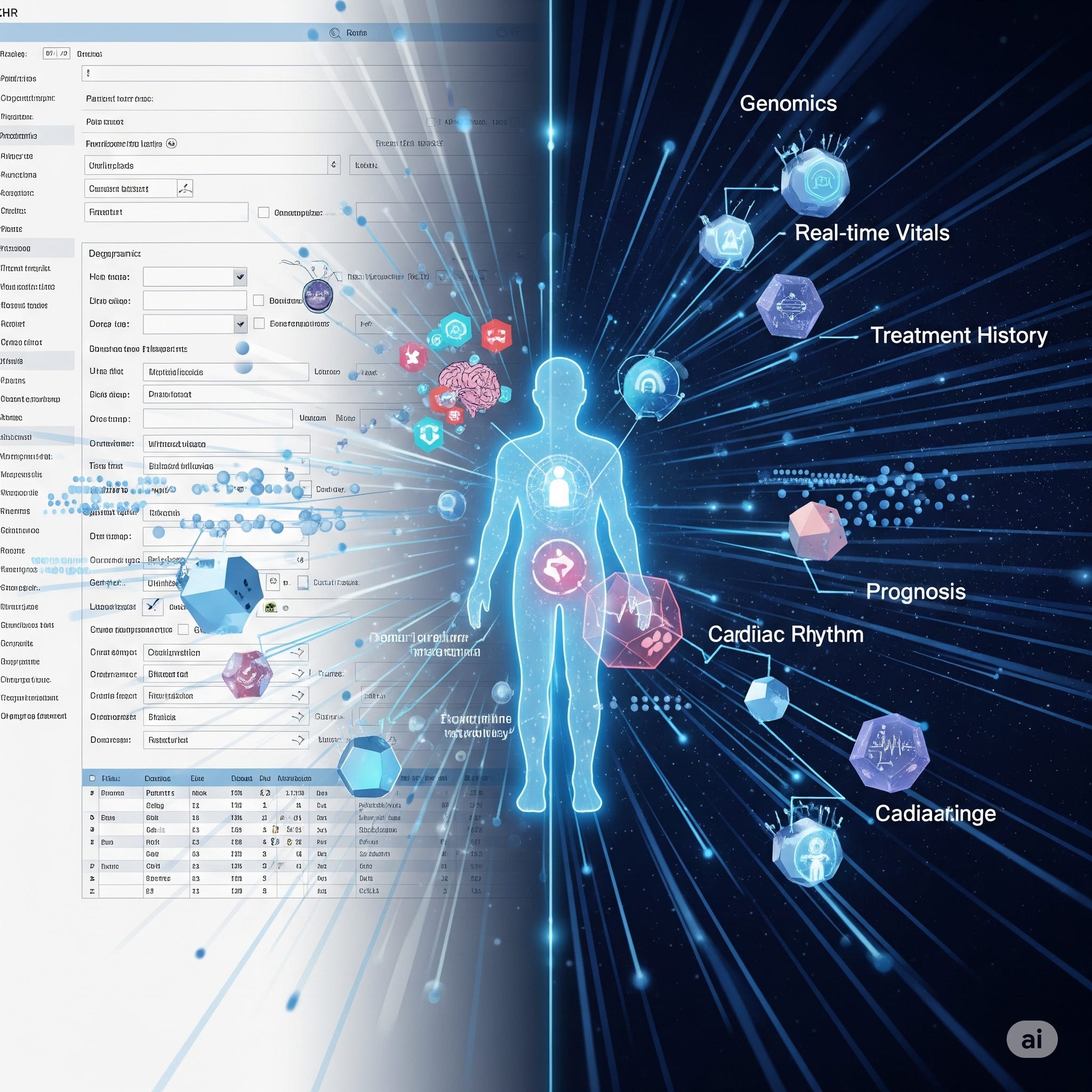
The message is clear: data curation is not a project but a foundational commitment. The future of healthcare will be built not just on data, but on a foundation of high-quality, autonomously curated data. The time to build the intelligent refinery is now.
Now try the FHIR Gold Miner!
In the game, you’ll step into the role of a Data Steward and be presented with batches of raw digital "ore" messy patient records built on the FHIR standard. Your mission is to use a set of refinery tools to prospect for errors based on the Assayer's Checklist, tackling issues of completeness, validity, and consistency. Each successful fix increases the data's purity, transforming worthless rock into a valuable "gold nugget" of actionable information. It's a fun, hands-on way to experience firsthand the challenges and critical importance of creating the high-quality data that powers modern healthcare.

Check out FHIR Gold Miner Game

Discussion about this post