I Tried to Schedule a Colonoscopy… and Was Reminded How Far We Still Have to Go
Fun times in Healthcare

I recently tried to schedule a routine colonoscopy. What should have been a straightforward preventive visit became a reminder of how far healthcare still has to go to make basic coordination work.
The visit with my PCP went well. I was seen quickly, and the team did everything they could within their system. They printed a referral order with all my information and handed it to me along with the scribbled phone number for the gastroenterology clinic. They were trying to help
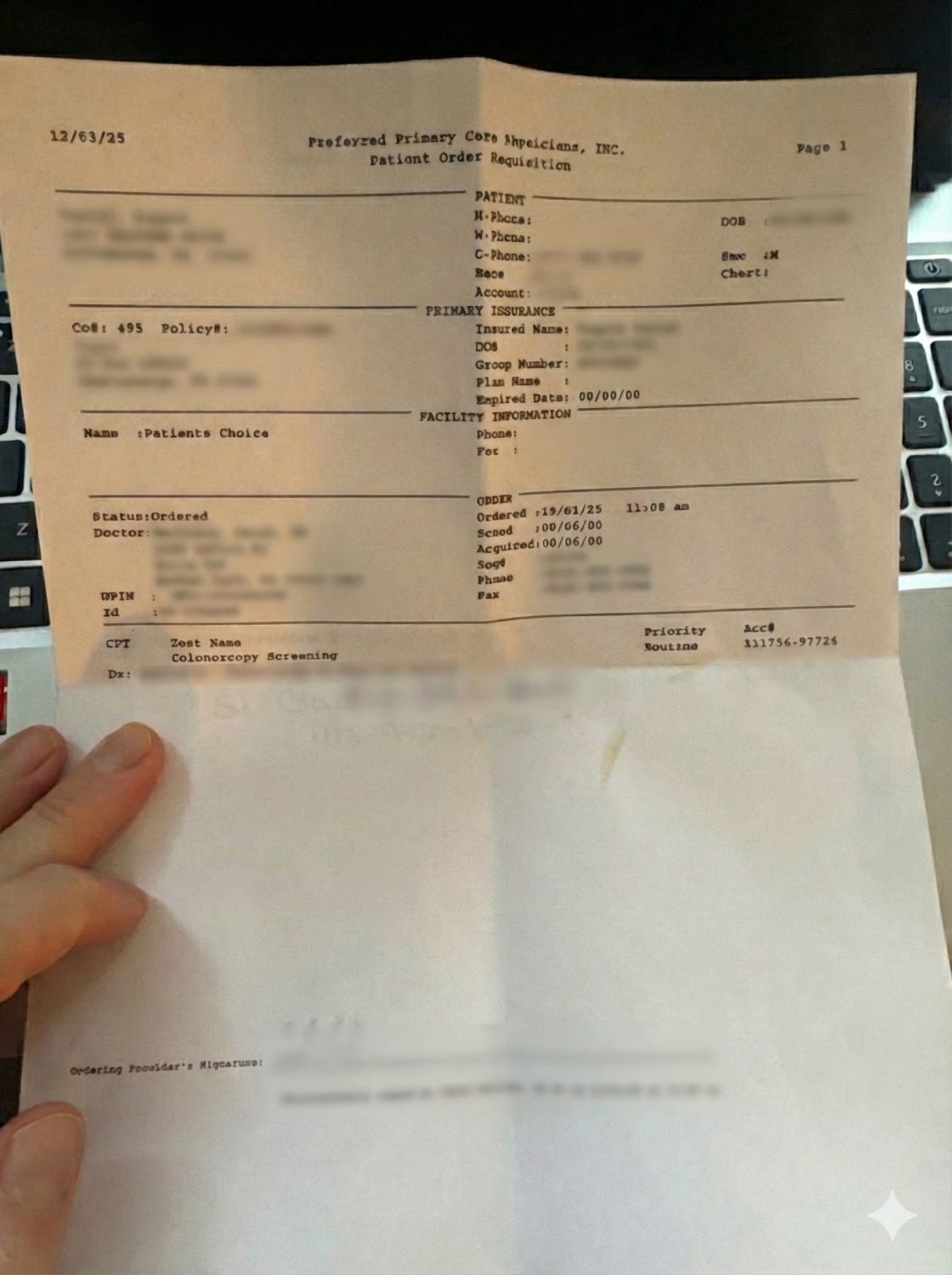
But the moment they handed me that piece of paper, the workflow broke. I became the connector between two systems that don’t talk to one another.
In 2025, that shouldn’t be the case.
The Queue, the Website, and the 40-Question Form
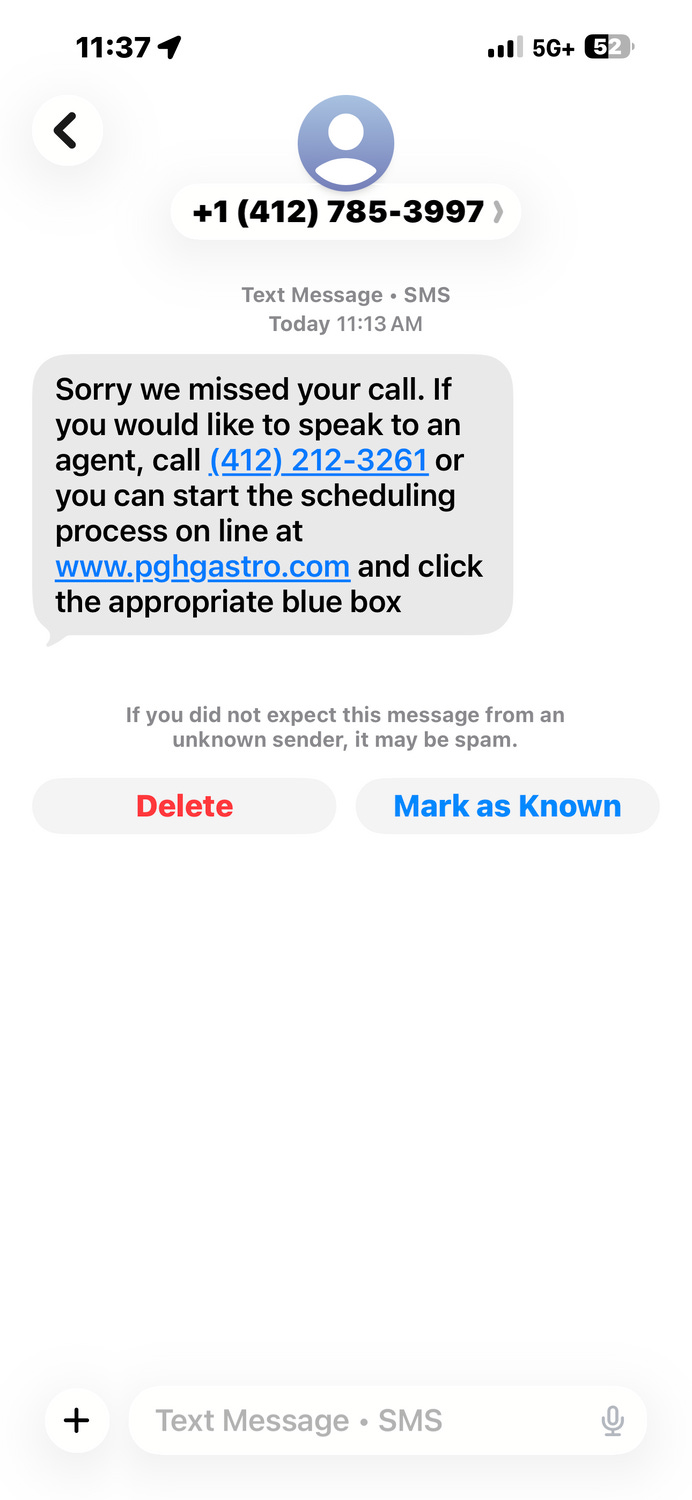
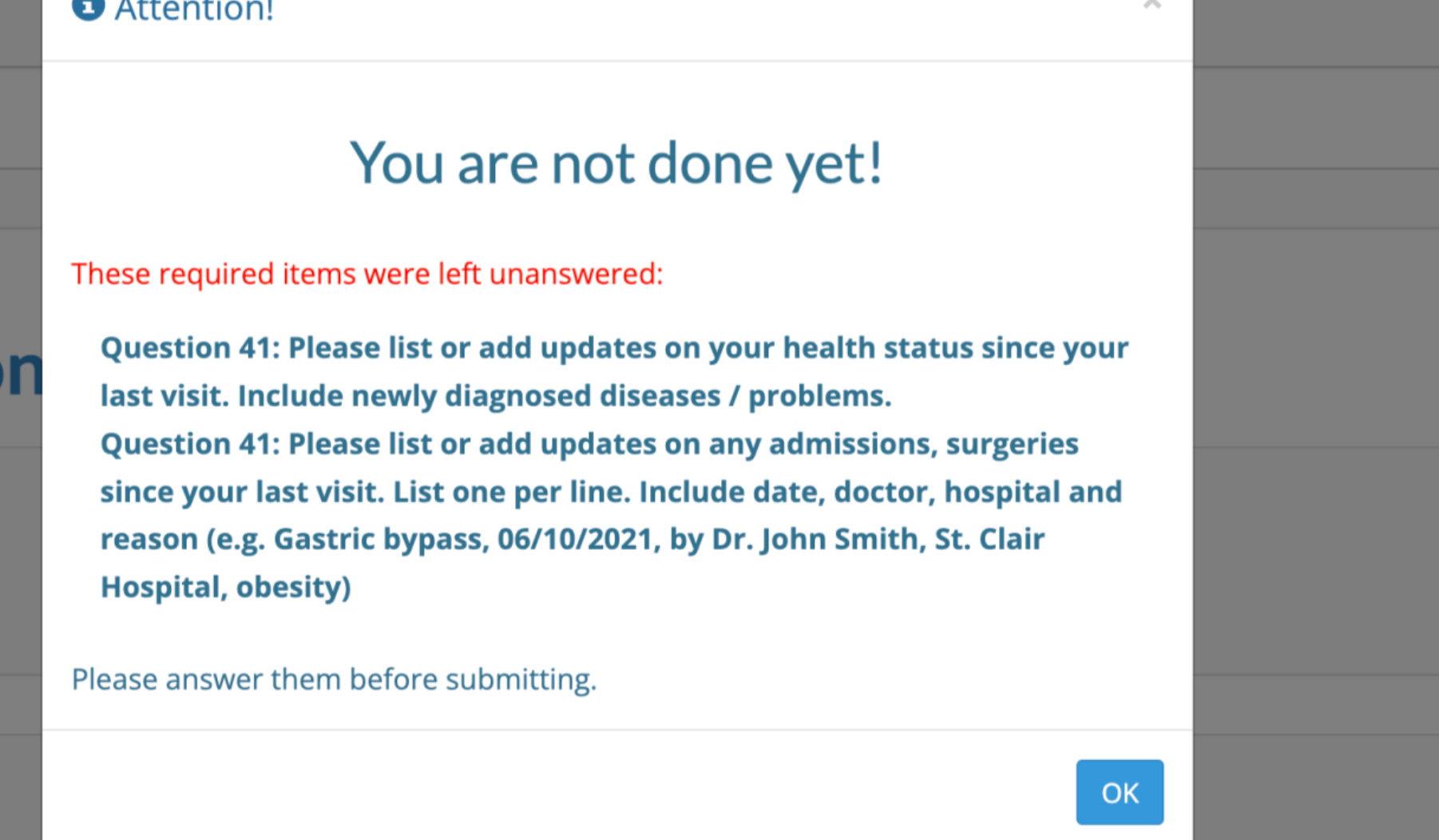
When I called the gastro clinic, I learned there were 28 people ahead of me. I hung up and tried the “modern” option their online request form. That form asked more than 40 questions, including:
every procedure I’ve had in the past three years
the full information for my referring provider
detailed reasons for the visit
past imaging and treatments
dates, locations, and outcomes
Every one of those details lives in an electronic medical record somewhere. None of it transfers. So the patient re-enters it manually.
This isn’t a patient experience issue. It’s the direct result of systems that can’t coordinate even the most basic referral and scheduling workflows.
The Easy Answer Isn’t the Right Answer
It’s tempting to say, “If both clinics were on Epic, this would be easier.” Maybe. But requiring every provider in the country to use one EMR isn’t a strategy. It’s consolidation. And it doesn’t fix the core problem.
The real issue is simpler:
The systems in use today regardless of vendor don’t communicate well enough to support end-to-end workflows.
Referral → scheduling → prep → procedure → follow-up should be connected. It shouldn’t require paper, phone queues, or 40-question forms.
Why This Matters
A colonoscopy isn’t an exotic procedure. It’s a common, recommended screening. If we can’t coordinate something this routine, how will we support:
multi-specialty chronic care
AI-driven care pathways
population-level outreach
precision medicine workflows
anything that requires more than two data points moving between systems
We talk about AI transforming care, but we still can’t reliably move a referral from point A to point B without friction.
What Needs to Change
The technology exists. We have FHIR. We have APIs. We have workflow standards. What we lack is adoption, alignment, and accountability.
We need:
1. Workflow interoperability, not just data exchange. Passing a PDF or CCD isn’t coordination. We need shared events, tasks, and status updates.
2. Incentives that reward connection instead of isolation. Today, no one loses revenue when a patient falls into a manual scheduling gap. That has to shift.
3. Vendors willing to treat referrals and scheduling as shared responsibilities. Not proprietary assets.
4. A recognition that patients should not be the integration layer. We shouldn’t carry paper orders, sit in call queues, or rebuild our medical history in every portal.
A Basic Expectation for 2025
If AI can write code, analyze guidelines, and summarize research in seconds, we should be able to schedule a colonoscopy without turning the patient into a data courier.
This isn’t a moonshot. It’s a foundational requirement for modern healthcare.
And if we want real progress real coordination, real interoperability, real patient-centered care this is exactly the type of workflow we need to fix first.
#2025inreview #FHIR #AI #TEFCA #FUNTIMESINHEALTHCARE
THIS!! ‘We talk about AI transforming care, but we still can’t reliably move a referral from point A to point B without friction.’
8 months within one system to get colonoscopy AND got approval from insurance company (was endoscopy combined) one week after results came out. 8 months to get approval?
It is EPIC-ly outrageous.