Apple killed the clipboard
Why TSA’s adoption opens the door to fixing one of healthcare’s most stubborn problems

Paper persists in healthcare not because it works but because we’ve never had a universal, verifiable, user-controlled identity layer that every American could onboard themselves into.
Apple may have just changed that.
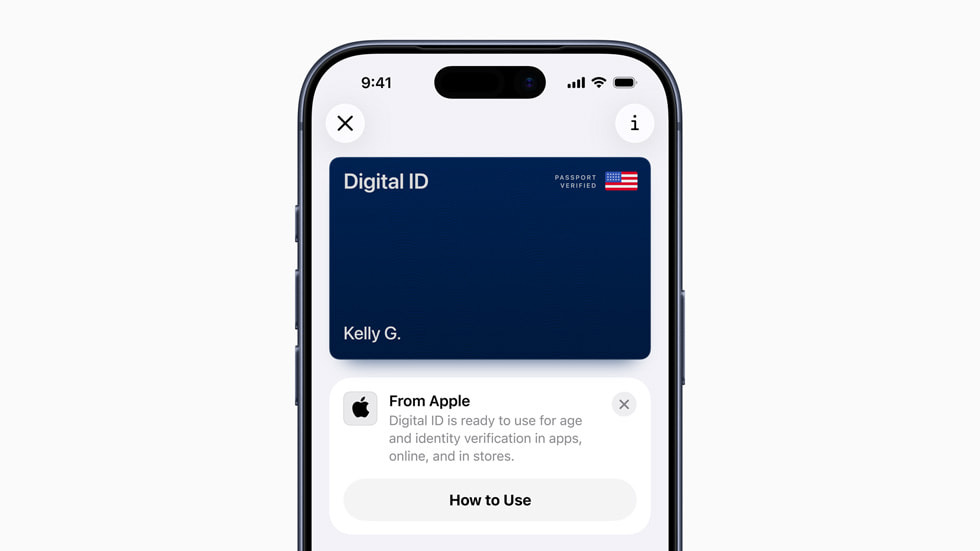
This week, Apple introduced Digital ID inside Apple Wallet, giving users the ability to scan their passport, read the embedded chip, and instantly create a verified digital identity on their iPhone or Apple Watch. TSA will begin accepting it at 250+ domestic travel checkpoints, with more to follow.
On the surface, this looks like a travel convenience feature.
In reality, this is the strongest shot we’ve ever had at killing the most persistent, painful, and shockingly expensive workflow in American healthcare:
the clipboard.
The Identity Problem Healthcare Never Solved
Every provider knows the drill.
Every patient hates it.
Every analytics leader suffers the downstream consequences.
Intake packets
Re-keyed demographics
Photocopied IDs
Insurance cards
Manual verification
Duplicate record creation
Missed matches
Failed analytics attribution
Endless operational waste
We’ve thrown portals, kiosks, apps, QR codes, and EHR “pre-check-in” workflows at the problem. Yet the clipboard remains undefeated. Not because providers want it. But because identity infrastructure in healthcare has never been standardized, never been portable, and never been truly user-controlled.
That’s the blocker Apple may have just removed.
A Universal Path to Digital Identity
Apple’s Digital ID rollout does something healthcare has never managed to do at scale:
Universal Enrollment
Anyone with a U.S. passport can self-enroll. No state-by-state fragmentation. No custom health-system onboarding flows. No third-party identity vendors controlling the experience.High-Integrity Verification
Passport chip scanning + device biometrics = identity assurance levels healthcare has long needed but rarely implemented well.User-Controlled Data Sharing
Users see exactly what data is being requested (name, DOB, photo, etc.) and approve it with Face ID. No handing over your device. No uncontrolled photocopying.Hardware-Anchored Security
Identity is stored securely on-device, encrypted, and not visible to Apple. That’s a massive shift in trust.
This is the same identity posture financial services, government, and travel ecosystems have been chasing for years. And healthcare can finally plug into it.
Why TSA Is the Perfect Catalyst for Healthcare
Historically, identity modernization fails in healthcare because no single organization can push the system forward.
TSA solves that.
Once millions of Americans start using digital IDs weekly in airports, the ecosystem of readers, standards, trust frameworks, and verification infrastructure becomes normalized and widely distributed.
Healthcare won’t have to force adoption.
Consumers will expect it.
Vendors will support it.
Regulators will follow it.
It becomes the equivalent of the EMV chip moment — the point when upgrading became easier than staying behind.
A Future Where Check-In Takes 10 Seconds
Here’s the workflow that becomes realistic:
You walk into a clinic.
Tap your phone to a reader or scan a QR/NFC panel.
A prompt appears:
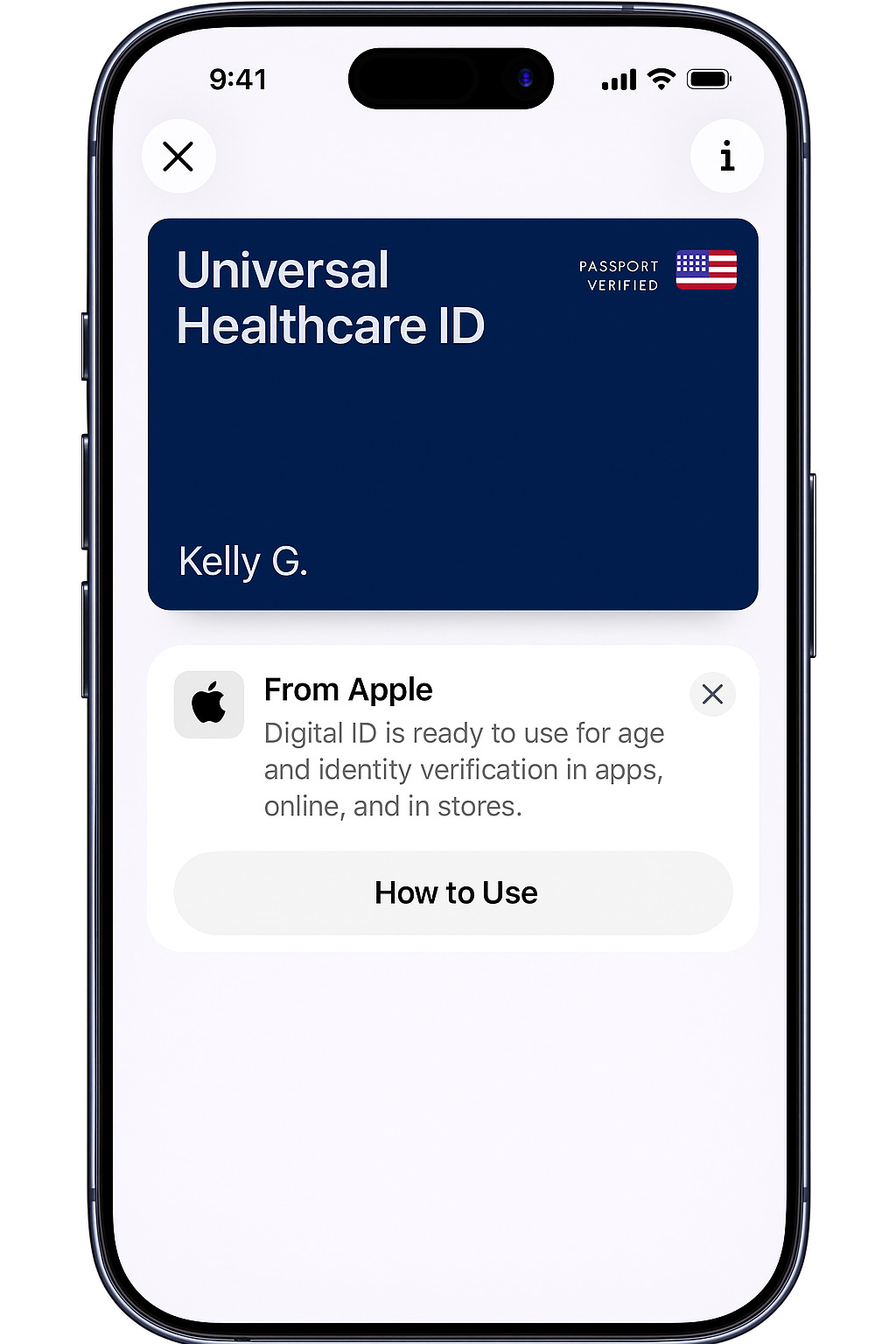
“Share your verified name, date of birth, address, and insurance ID with XYZ Clinic?”You confirm with Face ID.
Your EHR record is instantly matched or created.
No clipboard.
No scanning.
No re-typing.
No errors.
That single moment fixes half the downstream data-quality issues you and I spend our careers trying to unwind.
Why This Matters for Data Quality and Analytics
Better identity → better record linkage → better analytics.
It reduces:
duplicates
false matches
incorrect denominators
wrong attribution
friction in referrals
payer-provider mismatches
manual chart correction
It improves:
measure accuracy
population stratification
risk scoring
eligibility
care-gap detection
safety events
patient experience
Anyone working in quality, FHIR, analytics, or DQ knows this:
You cannot fix healthcare analytics without fixing identity first.
Apple just handed us a credible path. Confirm your Patient data by using the digital id.
What Healthcare Must Do Next
This is the moment to build not wait.
Here’s the practical roadmap:
1. Adopt Wallet-Based Identity Standards Now
Even before Apple expands APIs, healthcare systems can prototype wallet-based check-in, identity tokens, and verification flows.
2. Align Identity with FHIR Resources
Patient demographic bundles, Person-level deduplication, and identity-linkage events can all be mapped through FHIR. This is the cleanest on-ramp to operationalizing digital ID.
3. Build Intake Workflows That Assume Digital First
Design for the 30–40% of patients who will adopt this quickly. Maintain legacy fallbacks, but stop designing everything around paper as the default.
4. Modernize the Master Patient Index
Bring in wallet-based identifiers as trusted anchors. Use them to strengthen probabilistic matching. Measure the reduction in duplicates.
5. Use This to Accelerate TEFCA and Cross-Org Data Exchange
Consistent high-assurance identity lifts the entire ecosystem clinical data, claims, referrals, and analytics.
6. Push Vendors to Integrate
EHRs, check-in vendors, insurance portals, RPM systems, pharmacies the industry should not wait for Apple. They should lead.
The Clipboard Won’t Go Quietly But Its Days Are Numbered
Healthcare has long needed a breakthrough moment to unify identity and finally end the cycle of paper, duplication, waste, and error.
Apple didn’t set out to solve healthcare’s clipboard problem but they just handed us the infrastructure to do it.
Now it’s on us.
Product leaders, CIOs, CMIOs, payers, innovators, quality leaders, and FHIR builders.
If we treat this as just another Apple feature, nothing changes.
If we treat it as the new identity backbone for U.S. healthcare, the clipboard finally loses its last excuse to exist.
Discussion about this post